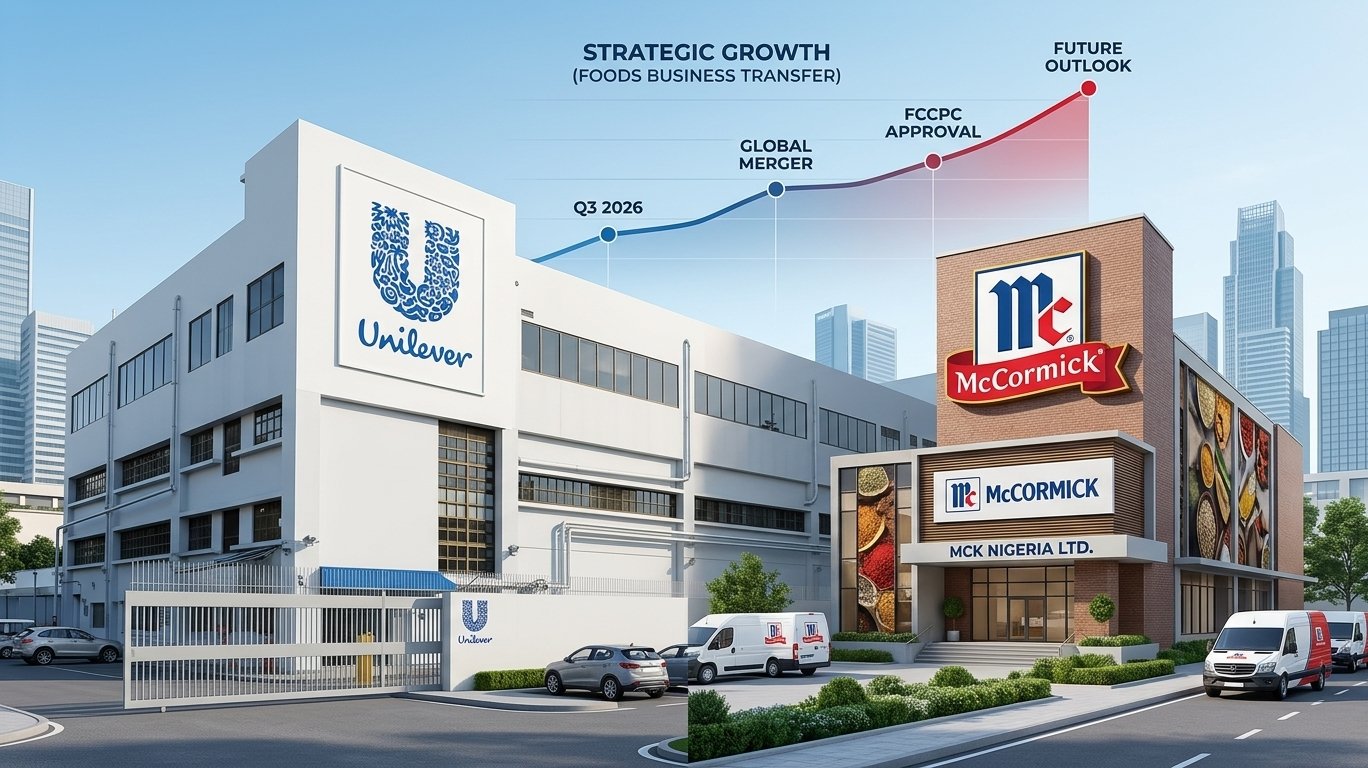
Unilever Nigeria PLC has announced a proposed plan to transfer its Foods Business to MCK Nigeria Ltd, a subsidiary of McCormick & Company, Inc..
In a major corporate realignment on the Nigerian Exchange (NGX), the Board of Directors of Unilever Nigeria Plc has recommended the transfer of its Foods Business to MCK Nigeria Ltd, a local subsidiary of American food giant McCormick & Company, Inc. The proposed all-cash, cash-free and debt-free transaction represents the Nigerian execution of a broader $44.8 billion global merger agreement announced in March 2026.
For generations of Nigerians, brands such as Knorr and Royco have been staples in local kitchens. However, Unilever's proposed exit from the food business signals a significant shift in its Nigerian operations, as the company moves towards concentrating on Beauty, Personal Care and Home Care. Beyond the immediate corporate restructuring, the transaction offers insight into McCormick's long-standing acquisition strategy and raises important questions for investors in domestic equities.
The Hidden Backstory: McCormick's Century-Old Acquisition Strategy
To understand McCormick's interest in Unilever Nigeria's food portfolio, it is useful to examine the American company's acquisition history. Founded in Baltimore, Maryland, in 1889, McCormick has expanded its global footprint through strategic acquisitions, established distribution networks and the preservation of recognised consumer brands.
One notable example dates back to 1947, when McCormick acquired A. Schilling & Company, a major competitor on the U.S. West Coast. The company retained the Schilling brand for years, recognising the value of its established customer base and market presence.
Another significant transaction came in 2008, when McCormick acquired Lawry's seasoned salt from Unilever for $605 million. The deal attracted scrutiny from the U.S. Federal Trade Commission (FTC) over competition concerns in the branded seasoned salt market. McCormick subsequently agreed to divest its Season-All brand as part of the regulatory process.
The proposed acquisition of Unilever's international Foods Business represents another major step in this expansion strategy. Through the broader global transaction and its Nigerian subsidiary, MCK Nigeria Ltd, McCormick stands to gain more than established product names. The acquisition also provides access to manufacturing capabilities, established supply chains, distribution networks and consumer relationships developed over decades.
Anatomy of the Unilever Nigeria Transaction
The proposed local transaction is structured around the transfer of the assets and operations associated with Unilever Nigeria's Foods Business. Its key components include:
- Transaction perimeter: The transfer covers the physical and intellectual property assets of the Foods Business falling within the agreed transaction perimeter.
- Transaction structure: The proposed transfer is structured on an all-cash, cash-free and debt-free basis.
- Regulatory approval: Completion remains subject to the required regulatory clearances, including approval from the Federal Competition and Consumer Protection Commission (FCCPC).
- Shareholder approval: The transaction must also satisfy applicable domestic shareholder approval requirements.
What the Transaction Means for NGX Investors
For retail and institutional investors holding Unilever Nigeria shares, the proposed divestment could fundamentally reshape the company's earnings profile. Following the transfer, Unilever Nigeria would operate with a greater concentration on personal care, beauty and home care products, including Vaseline, Rexona, Closeup and Pepsodent.
The strategic argument for the restructuring is that the company could become more focused on segments with potentially stronger margins and less exposure to some of the operational challenges associated with food manufacturing and distribution. The Foods Business reportedly contributed to an 18.4% revenue increase to ₦184 billion in Q3 2026, although rising raw material costs, supply constraints and intense price competition continued to pressure profitability.
A Potentially Leaner Business Model
Divesting the Foods Business could allow Unilever Nigeria to redirect management attention and capital towards its remaining product categories. A more focused operating structure may also reduce exposure to the working-capital demands and distribution challenges associated with its former food operations.
For investors, however, the central question is whether the remaining business can sustain revenue growth, protect margins and translate improved operational focus into stronger cash generation.
Dividend Prospects and Balance Sheet Implications
The restructuring could also have implications for Unilever Nigeria's balance sheet and future dividend capacity. Exiting the food distribution network may reduce certain operational and receivables-related risks, particularly given the company's previous experience with distributor debt and the ₦8.3 billion pre-tax loss recorded in 2019.
Combined with its reported ₦2.00 interim dividend, the proposed transaction could strengthen investor expectations around capital allocation and shareholder returns. However, any improvement in dividend consistency will depend on the final transaction proceeds, the company's post-divestment financial position, operating cash flow and the performance of its remaining business segments.
The Bigger Picture
Unilever Nigeria's proposed Foods Business transfer is more than a change in ownership of familiar consumer brands. It represents a strategic repositioning of one of Nigeria's established listed companies and provides McCormick with an opportunity to deepen its presence in a major African consumer market.
For NGX investors, the next important developments will be regulatory approval, completion of the transaction, the financial impact of the divestment and Unilever Nigeria's ability to deliver sustainable growth from its remaining product portfolio. Until these factors become clearer, investors should distinguish between the potential benefits of the restructuring and financial improvements that have yet to materialise.
This article is for general information and education only. It is not financial, investment, tax or legal advice. Markets carry risk, so do your own research or speak to a licensed adviser before you invest.
Other News
Top Stories- 1 Dangote Refinery Set for Historic NGX Listing on December 1 After SEC Approves Allotment Plan
- 2 Core PCE Inflation Climbs to 3.3% in October as U.S. Q3 GDP Surges to 4.3%, Sealing December Fed Rate Hike
- 3 U.S. Treasury Yields Edge Lower Ahead of Critical PCE Inflation Report and Holiday Closure
- 4 Dell Revenue Doubles to $54.9 Billion in Q3 as AI Server Backlog Surges to $132.3 Billion

Comments (0)
You must be logged in to post comments.
No comments yet. Be the first to start the conversation!