

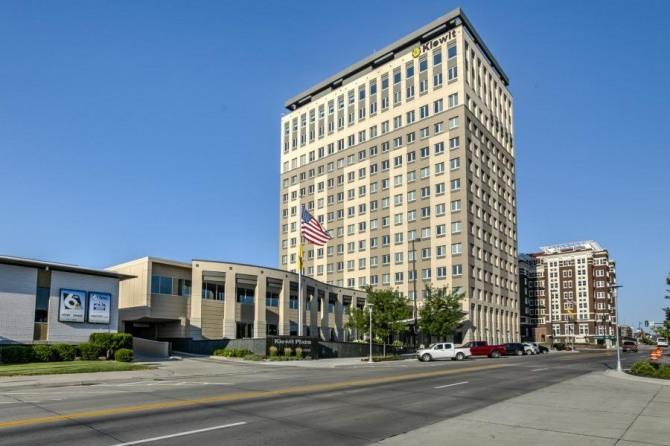
Berkshire Hathaway reduced its record cash pile by $31.9 billion in the second quarter, including about $4.5 billion spent repurchasing its own stock. The move marks a renewed use of capital under CEO Greg Abel as the conglomerate looks for opportunities after years of accumulating cash.
Berkshire Hathaway spent about $4.5 billion buying back its own shares in the second quarter, signaling a renewed willingness to deploy capital after holding an unusually large cash balance for several years.
The conglomerate said Saturday that its cash holdings fell to $365.5 billion at the end of the second quarter from a record $397.4 billion three months earlier. Of the $31.9 billion reduction, Berkshire spent $349.6 million repurchasing 478 Class A shares and $4.18 billion buying 8.6 million Class B shares.
The buybacks represent Berkshire’s largest return to its own stock after the company had previously gone more than a year without repurchases. Berkshire last bought back shares in the second quarter of 2024 before resuming purchases with $234 million of repurchases in the first quarter of 2026.
Berkshire has said it can repurchase shares when management believes the stock is trading below its intrinsic value. The latest purchases came after Abel, who succeeded Warren Buffett as chief executive, said in March that Berkshire shares offered sufficient value to warrant a buyback.
The company’s latest financial activity also showed a shift in its broader investment strategy. Berkshire bought more equities than it sold during the quarter, ending a 14 quarter streak in which it had been a net seller of stocks.
The timing of the repurchases has drawn differing views from investors. Maverick Equity Research estimated that most of Berkshire’s second quarter purchases were made at about 1.4 times book value, around the stock’s 10-year average. Previous periods of more aggressive buybacks occurred when the shares traded closer to 1 to 1.2 times book value.
Investor Michael Burry expressed skepticism about Berkshire Hathaway’s investment prospects under new CEO Greg Abel, saying he had concerns that Buffett’s successor would lack the patience to wait for what he described as a “fat pitch.”
“I do not find Berkshire an attractive investment going forward,” Burry wrote in a post on Substack.
Burry acknowledged that Berkshire had spent only a relatively small portion of its cash reserves and still held a substantial cash balance. However, he said he viewed the company’s initial moves under Abel as “more framing moves than investment moves.
Others viewed the repurchases more favorably. Macrae Sykes, a portfolio manager at Gabelli Funds, said the $4.5 billion buyback was positive because it indicated management viewed the shares as undervalued while also finding an opportunity to deploy cash.
Despite the buybacks, Berkshire retains one of the largest corporate cash reserves in the market, with $365.5 billion still on hand at the end of the second quarter.

Comments (0)
You must be logged in to post comments.
No comments yet. Be the first to start the conversation!